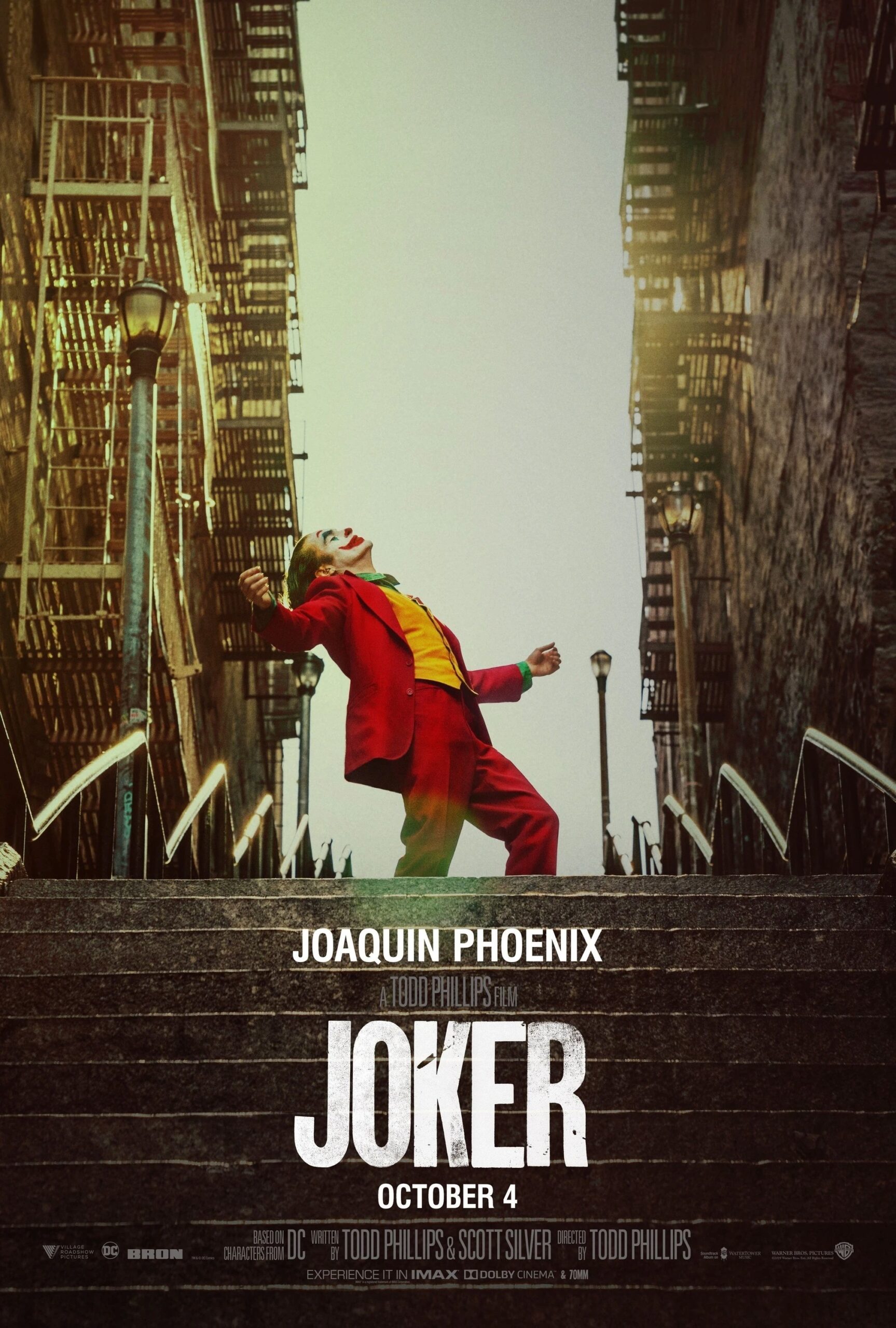
‘JOKER’ was a brilliant film, might I start off by saying. As a comic book fan, and as the Joker being my favorite comic book character of all time, I went in with high expectations. At first, I was very skeptical upon seeing the teasers and trailers due to it being different from the source material–way different. I then took it upon me to simply watch it and see for myself whether or not it was indeed a good depiction of the Dark Knight’s arch nemesis. And in the end, it certainly did not disappoint.
I won’t give a detailed synopsis of the film but instead compare what comic book Joker is in comparison to the film’s depiction. Starting off, the film borrowed influences from a variety of media. Apart from the classic films it borrowed its visual and narrative influences from, the film also took in some classic Joker appearances from the comics. The most accurate description of the film, for me, is it “not being an accurate comic book adaptation but having a comic-accurate depiction of the Joker character”.
For this analysis, I will be using the graphic novel entitled “Joker” by Brian Azzarello (my all-time favorite comic book) as a key reference due to it describing the morality and humanity of the Joker character.
Joker has always been about ideology, psychology, and philosophy in his core above everything else. Remove the clown make-up, the silly gags, the bloody-red smile, and the occasional laughing gas turned poison, you have an intricate character broken down into layers that you would normally overlook. Joker in the comics has been described as psychotic and deranged but if you are to take his origins (with whatever choice you choose considering his is a question of multiple choices) and his humanity, you can see a man with ideals and philosophy.
He started off as a simple man who just happened to have one bad day (from The Killing Joke). This was adapted into the film. He just wanted to be a successful comedian making jokes to an audience who would laugh at them. Instead, he himself is treated as a joke by society and is the one being laughed at. This may be a harsh depiction of reality or maybe even an over-dramatization of it considering that this is Gotham City we’re talking about here, but it does not rule out the fact that he was treated poorly, not simply from the abuse he takes, from the laughs directed to him, the stares darted towards him, but also his own life being one big existential crisis. Not knowing what’s wrong with you or who you are and constantly being treated with neglect makes you redirect your questions to everybody else. What’s wrong with them? Who are they? Why are they like that?
In the comics, the Joker treats Batman as the only one who gets him as who would be sane while dressing up as a bat at night to fight crime? No one. I felt the scene at the gate of Wayne Manor was a depiction of this. Arthur was genuinely smiling then while making a young Bruce smile. And later depicted in the ending when Arthur was finally realizing his identity as the Joker and Bruce starting his way on the path of becoming Batman with the death of his parents. Another scene akin to this was the last bit where he was talking to the social worker and simply said that she wouldn’t get the joke he was laughing at. This was a jab at her for being dead by the time she gets it seeing as he does kill her but also for the reference that she still won’t get it as she isn’t like him yet. What makes this final scene interesting was that it becomes parallel to a young Bruce that shows he is the only one to get his joke (maybe in the future). This was to show that the two are indeed connected and bonded by fate in some way just like in the comics.
People think that because of Heath Ledger’s portrayal of the Joker in The Dark Knight, the character serves to be an anarchistic figure who goes against society’s norms and such. While yes, this is true, it isn’t meant to be on purpose. The Joker isn’t meant to be a political figure of pure anarchy. This was said in the film as well where he commented that he wasn’t political and couldn’t care less about inspiring the clown movement in Gotham. He would do things out of simply being in the mood of doing them. The moment when he killed his colleague yet simply let the small guy go, that was a tense moment in the cinema. You didn’t know whether he was going to kill him or actually let him go. There is a human with a heart behind that smile facade and since the small guy didn’t do anything against him, he let him go. This was also seen in the Joker graphic novel where it shows the Joker’s sympathy and humanity when handling his men but also at the same time being able to disregard this morality when he becomes out of the mood for it. In the book, he saves a girl from a thug yet proceeds to rape her. This is what the Joker is. Some depictions of him, even in in comic books, makes him seem like a calculating figure when in fact he is utterly just pure chaos that disrupts order just because.
The film didn’t make Arthur the Joker until the very last moments. The entire film was a tipping point to becoming the iconic Clown Prince of Crime of Gotham. It showed a fractured mind, believing what isn’t real and making your life revolve around it–the sensations and feelings being real even when it is not. Arthur was hallucinating but never for a second did he believe the life he created within his mind was false. It was a distorted sense of truth and reality. Sure, some would say it’s because of mental illness, but also because of the subconscious feeling of escaping reality and truth when you’ve simply had enough of it. The dance sequences of the film was the purest form of Arthur and the most genuine of it all. He felt free and was slowly transforming to accepting the actuality of reality he is in. It’s as if he was shedding his cocoon into finding out who he was. The audiences could not distinguish what is in fact real and not in the film as there are a lot of open-ended scenes and ones that don’t match others. This can be a depiction of that multiple choice origin story the Joker has. Even in the comic books, there isn’t a concrete answer to this and it is simply up to the reader how to interpret the series of events that led to him becoming the Joker. This is the same as with the film.
I personally choose to believe that the dance sequence on top of the car was an epiphany for him. Whether or not that scene actually happened in reality was not the point. The point being that he had finally accepted his true self be it a monster in human skin. The moment he makes a bloody smile on his face was chilling to say the least. It was at that moment everyone knew that they made him into a monster. It is a very good film to watch indeed. It wasn’t meant to make you feel like the Joker is an anti-hero or is in the wrong. He is a villain and he was depicted as such. It just happens that even villains have their own motives and ideologies they live by and are still human beings, but this still does not rule them out as villains.
Read Brian Azzarello’s Joker graphic novel if you have the time. It is one of the Joker stories that actually showed his psychology and philosophy the most in my opinion and a lot of comparisons to the film could be made from there. As I have said, the film wasn’t a comic-accurate adaptation but instead had a comic-accurate depiction of the Joker character.